
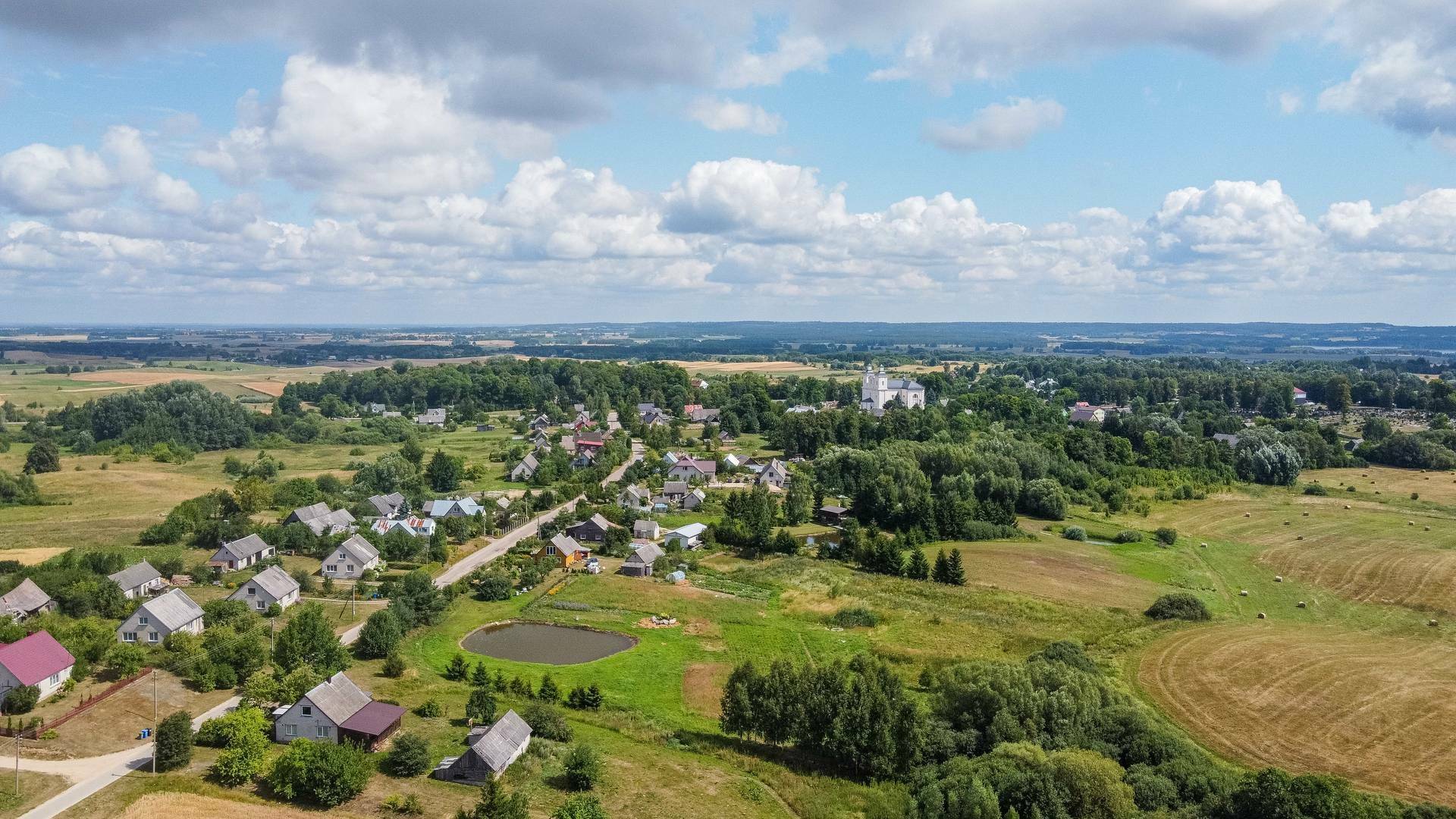
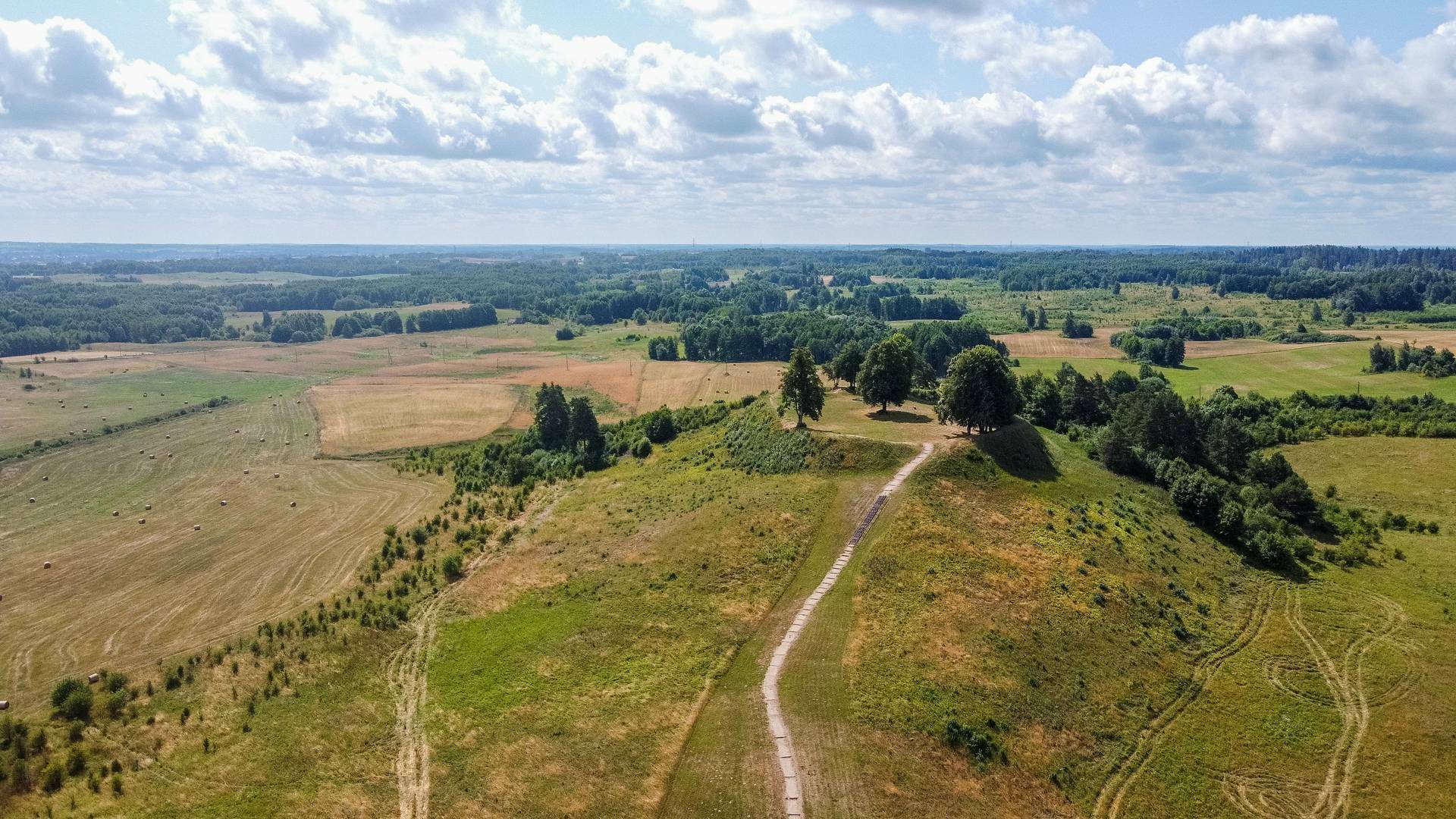
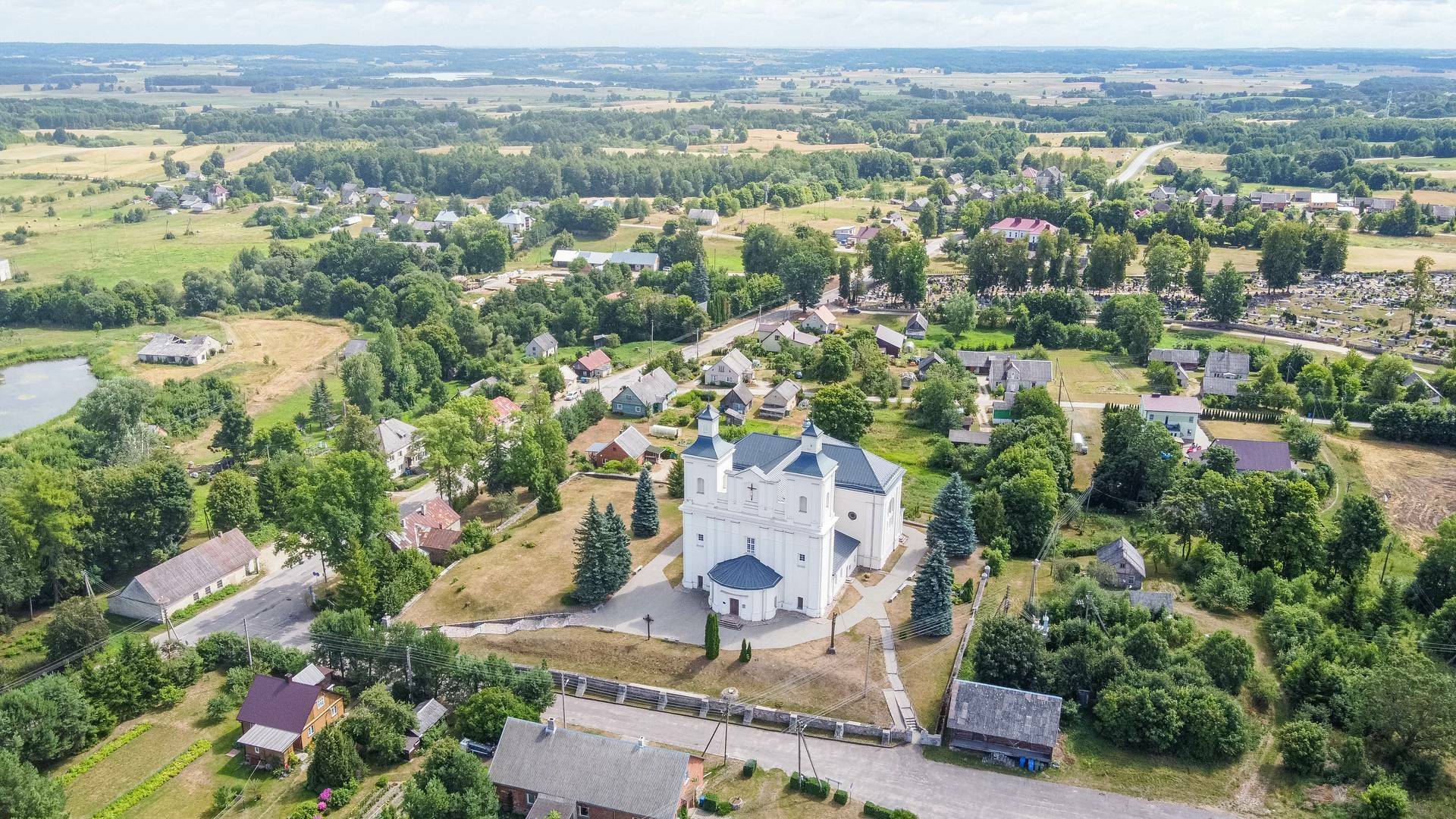
In the second half of the first millennium AD, one of the most powerful Jotvingian castles was built near the future Rudamina, which was probably destroyed by the Teutonic Order in 1283. In 1537–38, the nobles B. and P. Plikiai received land near the Rudamina stream and founded a manor. The village of Rudamina was established near the manor farmstead, a church was built in 1592, and Rudamina was granted the privilege of a market. During the Polish–Lithuanian Commonwealth–Russian War of 1654–67, Rudamina was destroyed. In 1745, the town of Rudamina and the center of the manor parish were mentioned, where a market was held in 1755–60. In 1755, there were 6 artisans', 14 Jewish and 6 gardener's houses, and a parish school was operating. In 1800, 50 houses were listed in Rudamina, which was named a town, and in 1810 – 39 in the village.
At the beginning of the 19th century–1950 Rudamina was the centre of the parish. In the 1920s, a parish school, brewery and hospital operated there. During the 1863–1864 uprising, vicar J. Dailidė read the rebel manifesto in the church, for which he was shot in 1864. In 1906, a branch of the Žiburis Society was established. On 3 November 1941, the Jews of Rudamina were murdered along with others in Katkiškės near Lazdijai by order of the Nazi German occupation authorities. On 3 February 1945, the town was attacked by Lithuanian partisans. In 1940–41 and 1944–53, the Soviet authorities deported 21 residents of Rudamina. 1950–78 Rudamina was the centre of the district. Doctor A. Starkus was born in Rudamina, and priest J. Zdebskis was buried. In 1800, the town had 269 inhabitants, in 1923 – 133 (in the manor – 123), in 1959 – 329, in 1970 – 414, in 1979 – 367, in 1989 – 286, in 2001 – 296, in 2011 – 320 .
Rudamina has a Rudamina Craft Center , which has an interactive Jotvingiai learning space, and various educational programs can be booked.
Reviews