

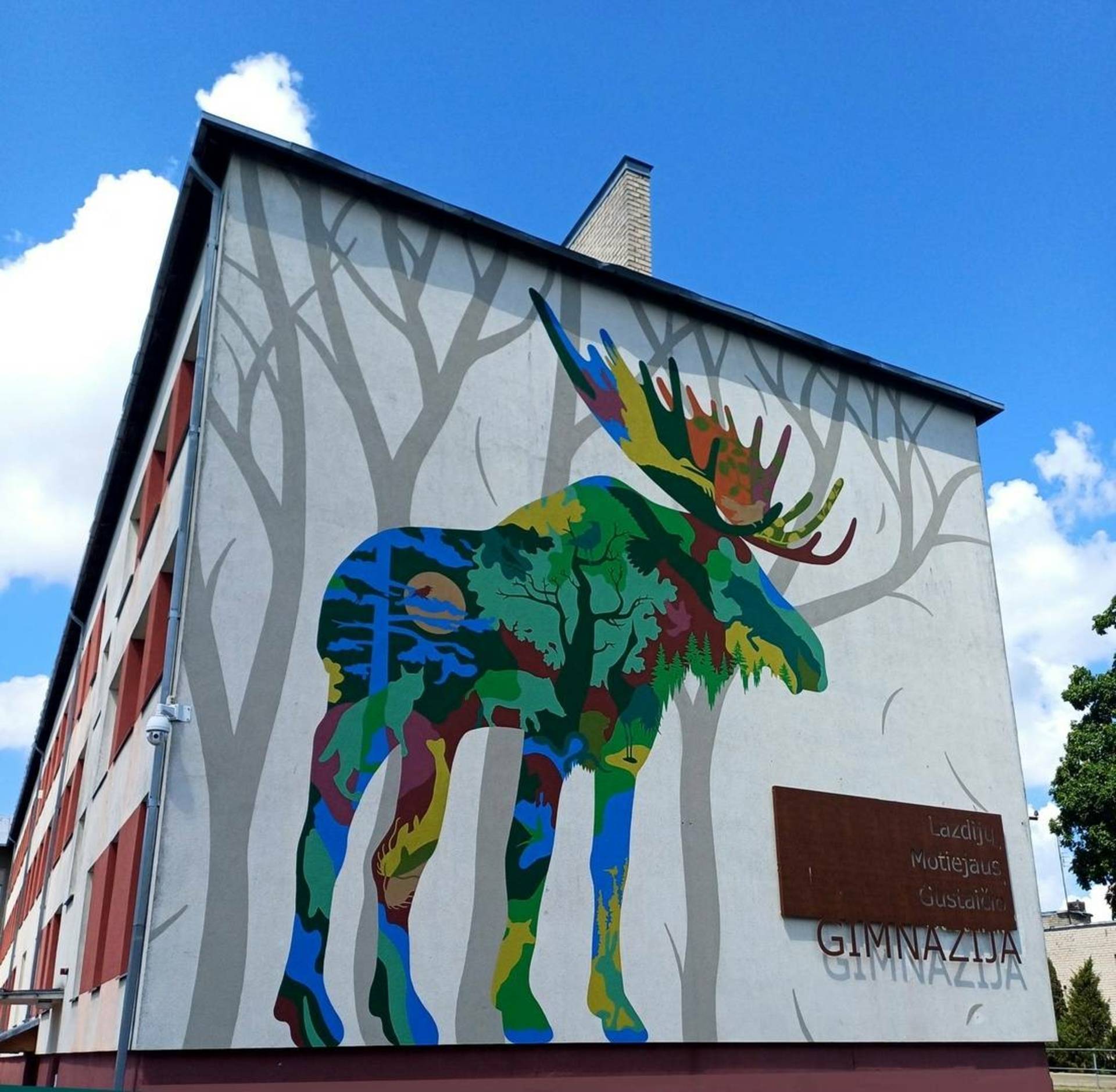
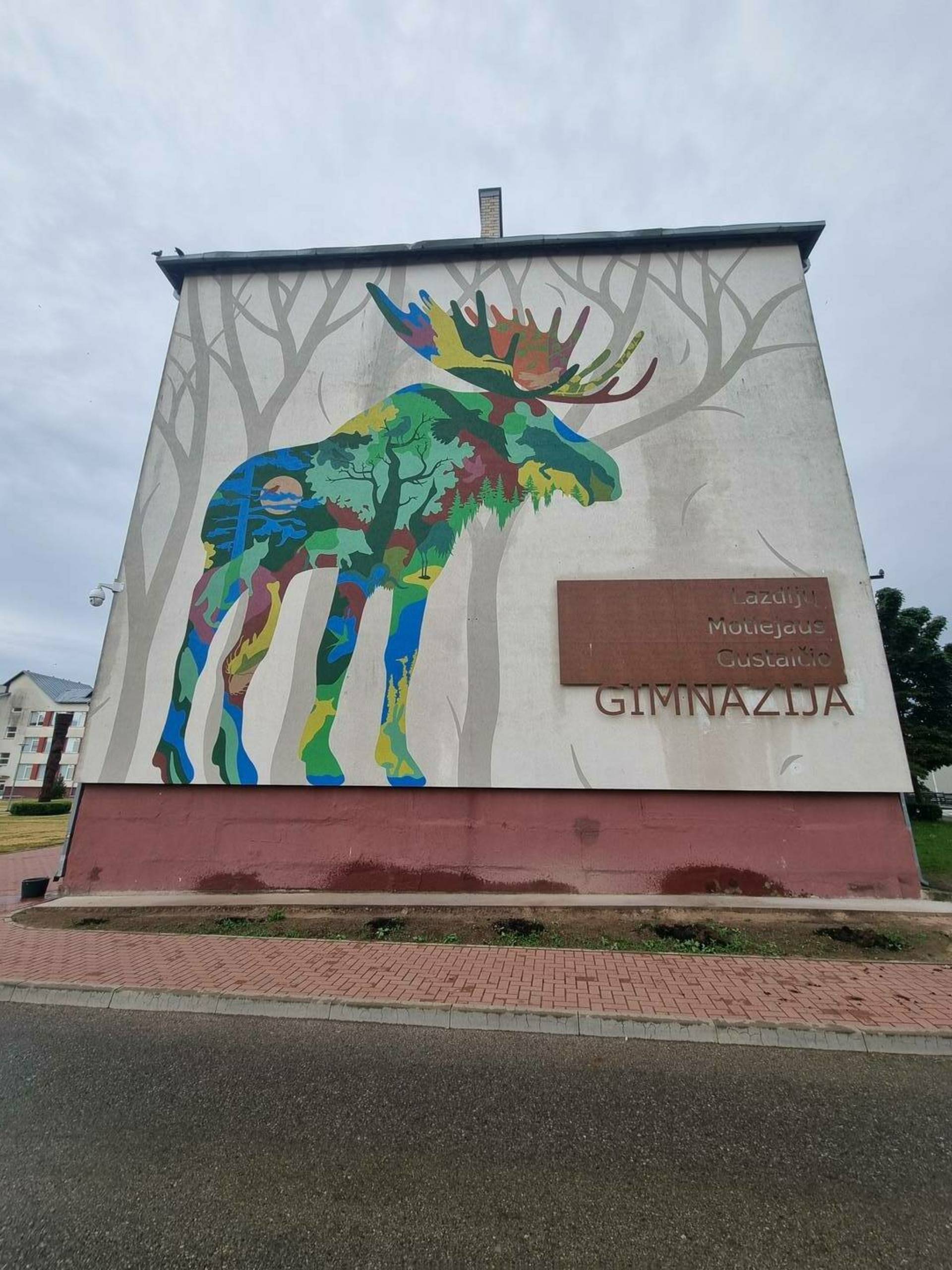
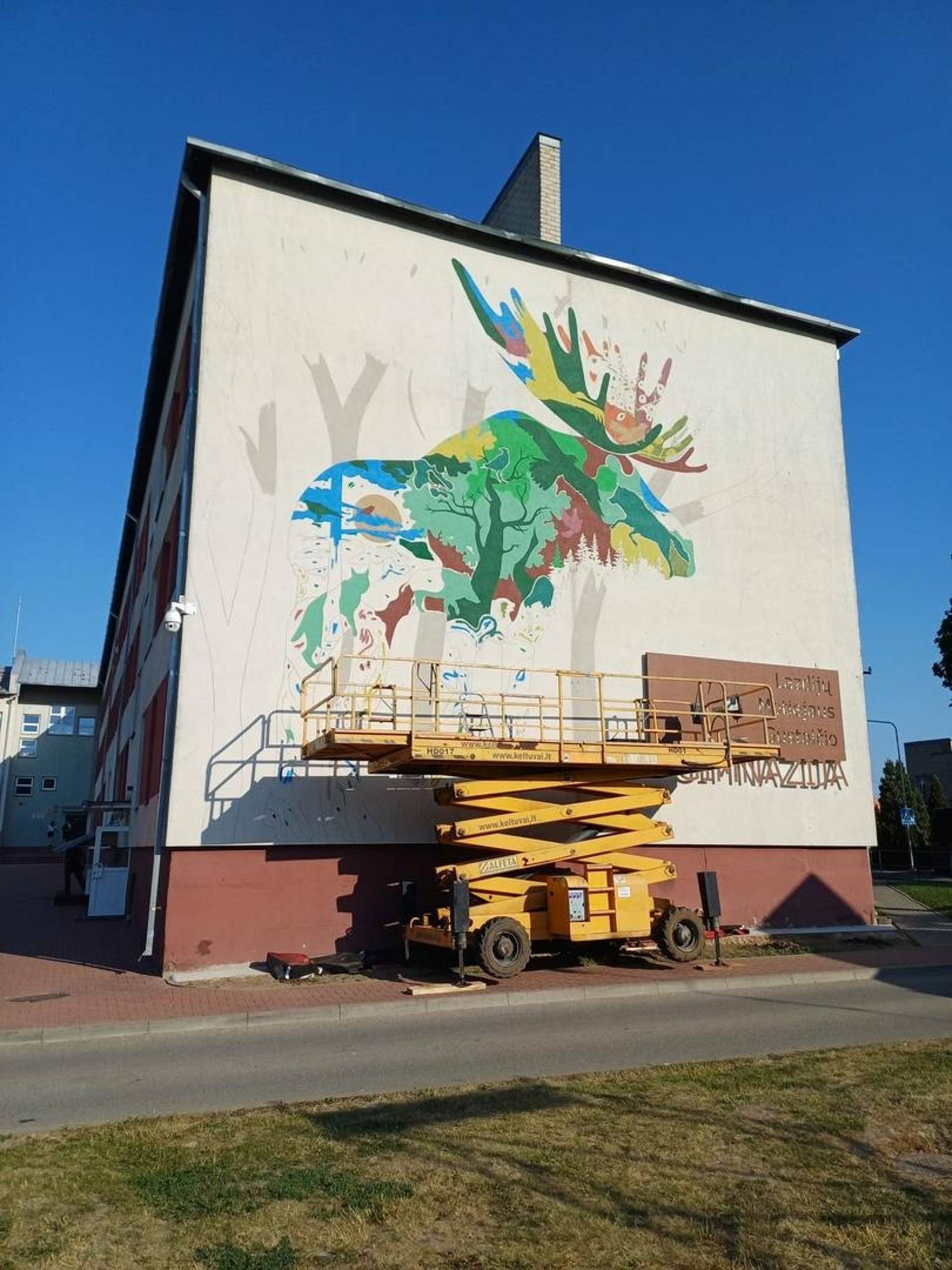
"FOREST KING - FOREST BROTHERS" is a neo-fresco , dedicated to honoring the partisans of Dainava district, who fought and died for the independence of Lithuania. In the Lazdijai region, the memory of the Freedom Fighters is cherished: there are many monuments, information stands and signs throughout the district, commemorations of important dates, thematic hikes, and camps are organized.
The moose dedicated to the memory of freedom fighters has “settled” in a symbolic place – on the wall of the Lazdijai Motiejus Gustaitis Gymnasium. This school, established in 1920, was a witness to important historical events, and many future “forest brothers” studied or worked there before the occupation. Adolfas Ramanauskas-Vanagas, the commander of the armed forces of the Lithuanian Freedom Fight Movement, also graduated from it. Next to the gymnasium is the Lazdijai Freedom Fight Museum , famous for its engaging, interesting and modern exposition.
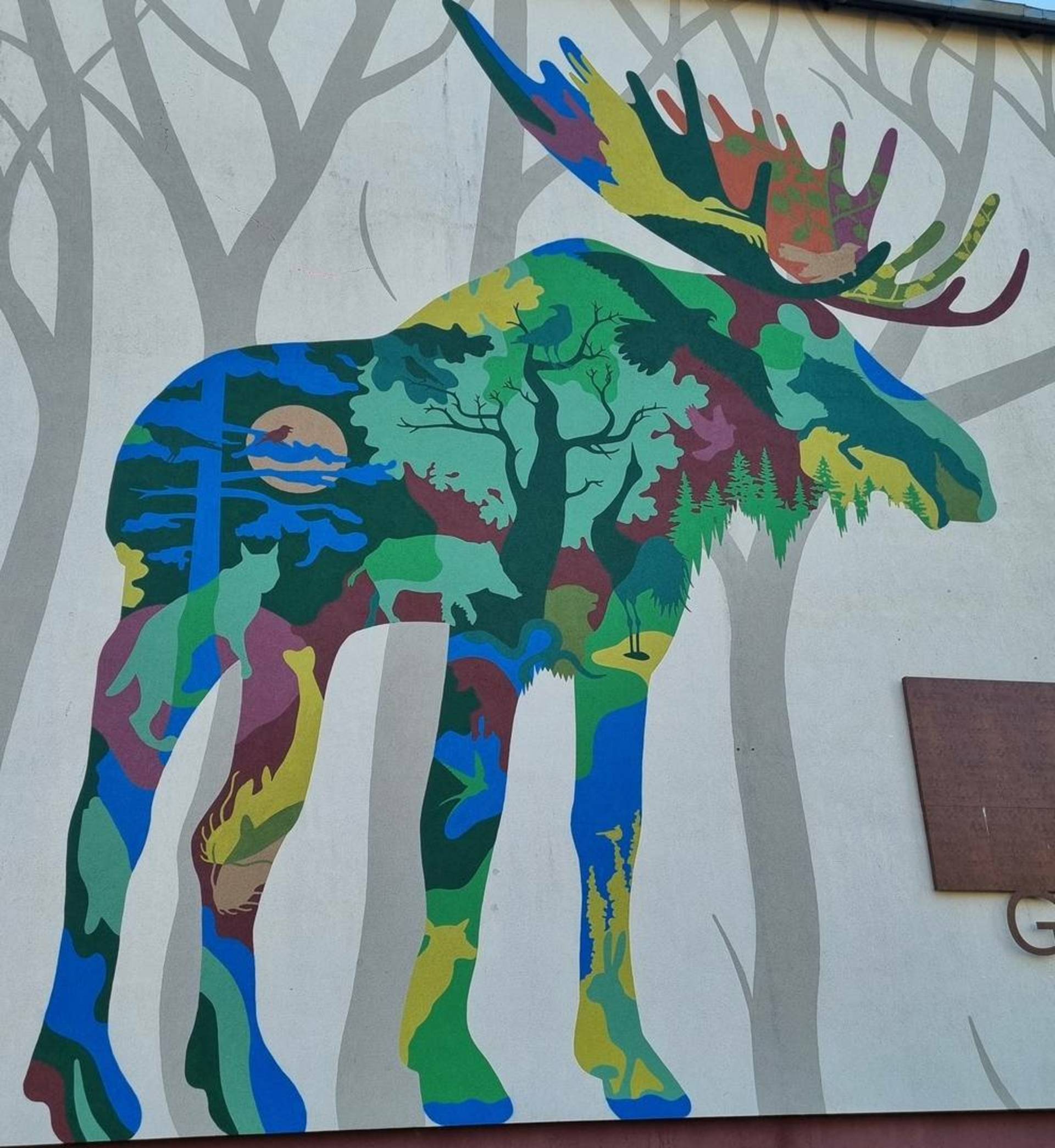
At the center of this street art piece is the city’s emblem animal – the moose – a symbol of strength and independence. Inside the moose silhouette, we see a variegated forest thicket, in which, upon closer inspection, the silhouettes of the partisans’ nicknames are hidden. This reflects the hiding and survival of the Freedom Fighters in the Lithuanian forests. The partisans were invisible like forest birds and beasts, merging with nature. They tried to survive at all costs, taking advantage of the opportunities provided by the forest. The ideas of constant vigilance, caution, struggle for survival and unity with nature, reflecting the everyday life of the partisans and their unbreakable spirit, are the axis of this piece.
The drawing "hides" many silhouettes of partisans' pseudonyms. You can read more about this neo-fresco here
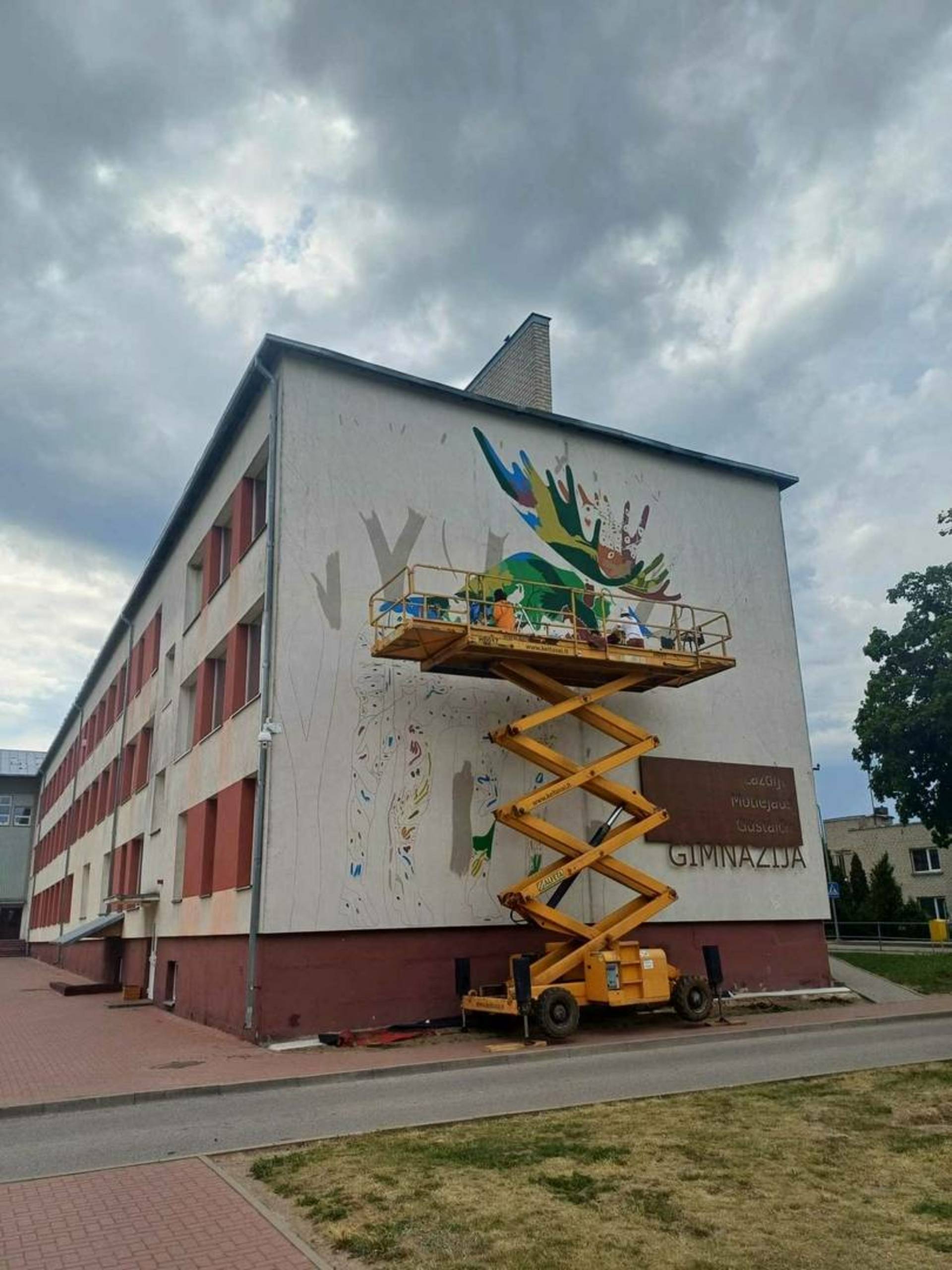
The wall was painted by "Gyva Grafika" , the author of the drawing and its idea is Ieva Vaivaraitė-Ošikienė.
The project was funded by the Lithuanian Council for Culture and Lazdijai District Municipality.
The project was implemented by the Lazdijai Cultural Center.
We would like to thank the Lithuanian Genocide and Resistance Research Center and the Lazdijai Regional Museum for their consultations.
Reviews